An Exploration of the Correspondence as Listed in the EMLO Database
Tucked away on the grounds of palace Noordeinde in the Hague sits the Royal House Archive, a gorgeous building which houses The Royal Collections of the Netherlands. These archives are vast, spanning from the mid thirteenth century all the way to the present. The correspondences of the wives of the Stadtholders of the Dutch Republic, which make up a sizeable chunk of the Stadtholder’s wives’ archives, have hardly been studied. These women influenced social, cultural, and political processes within the Republic and beyond during their lifetimes and deserve dedicated study. However, until recently, researchers could only study these documents within the study room of the Royal House Archive. This significantly restricted accessibility has caused these sources to be underutilised.
In addition to easier access, the digitizing of these sources pushes the boundaries of possibility beyond what can be achieved by using physical paper sources, in terms of accessibility and research potential. One example of this is Transkribus. This AI-powered platform is capable of reading handwritten text and transcribing it with the click of a button. This makes letters written in written in German cursive or secretary hand more accessible to a wider range of researchers, rather than exclusively to those who have the time and means to learn the ins and outs of such a script. In terms of research, Transkribus offers the possibility to create databases of fully searchable letters. To illustrate the potential of this, one only has to look at the research done by Ineke Huysman. This research used this method to examine the difference in the language used by Stadtholder William IV of Orange-Nassau in his letters to his wife and his mother.[2]
Needless to say, the publication of Anne of Hanover’s letters on a platform like EMLO enables more researchers than ever before to research this fascinating woman. However, with more than 4,100 letters in this database alone, it can seem daunting or even downright impossible to know where to start. Therefore, this text serves as an introduction to the digitized archive, giving both an impression of the general layout of the archive as well as highlighting interesting letters that serve as an accessible starting point for new research. The correspondence has been published online on 29 September 2023. The full inventory will be made available by the Royal Collections at the same time.
Biographical information about Anne of Hanover
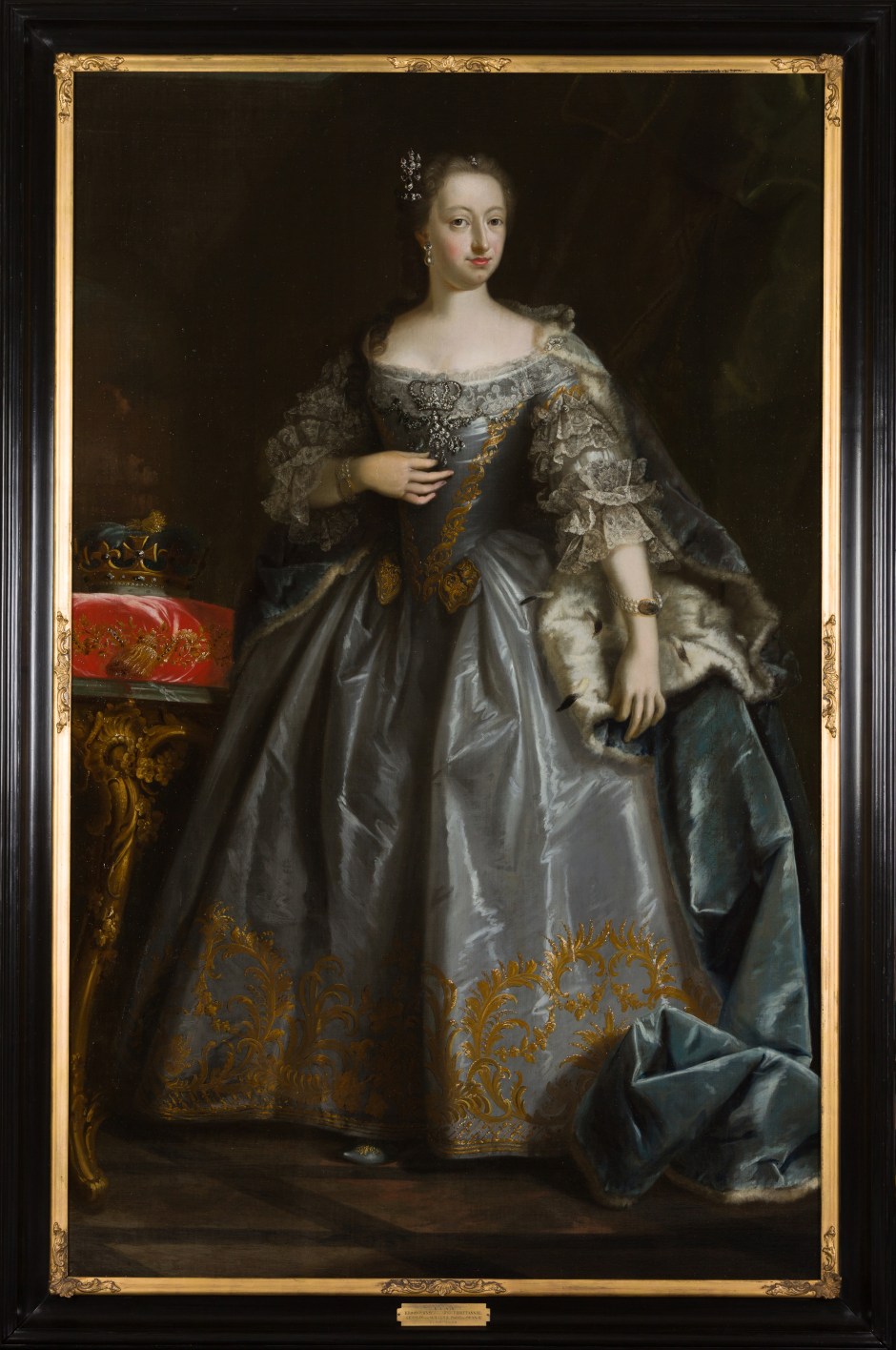
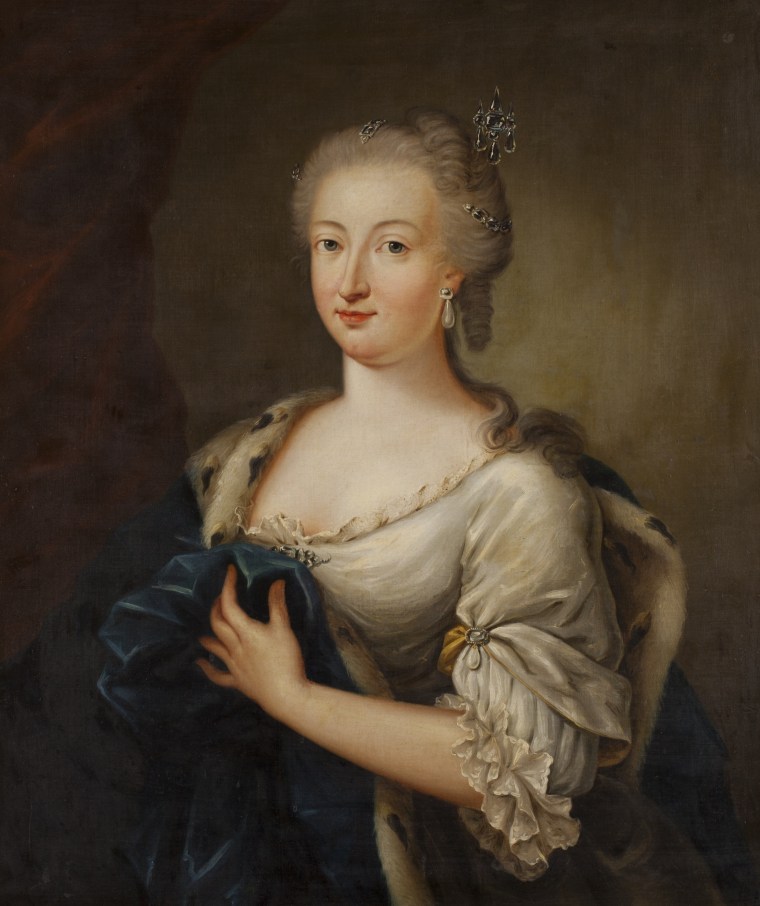
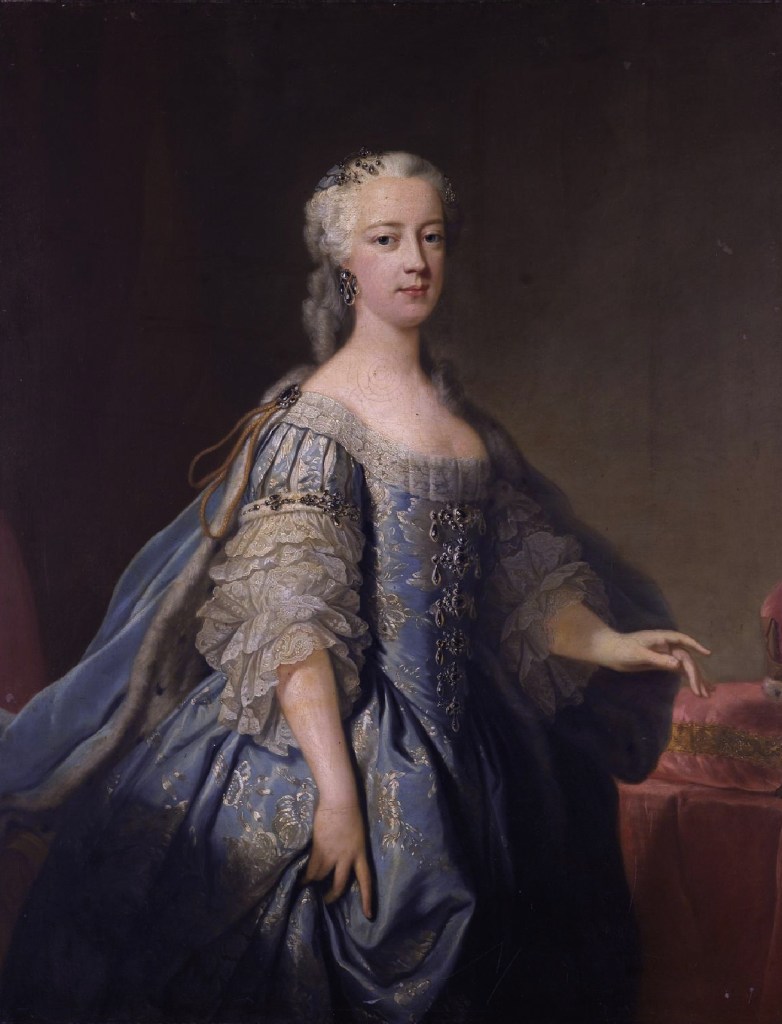
Image 1. Self Portrait by Anne of Hanover, 1740, Royal Collections The Hague.
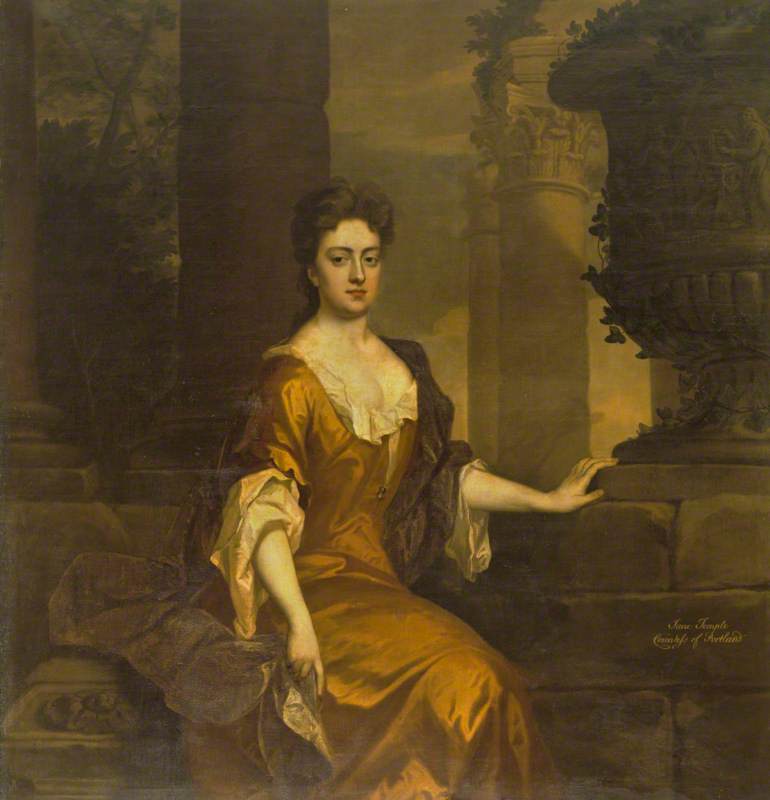
Anne of Hanover was born on the second of November 1709 in the Herrenhausen Palace near Hanover in the Holy Roman Empire to Georg August, duke of Brunswick-Lüneburg (1683-1760) and Caroline of Ansbach (1683-1737).[3] At that time, the dynasty of Georgian kings that would give her high standing and the title of Princess Royal of England had yet to take shape. Her grandfather, Georg Ludwig, the elector of Hanover (1660-1727), ascended the British throne in 1714 after his second cousin, Queen Anne of Great Britain (1665-1714), died childless. As the granddaughter of king George I, Anne moved to St. James’s Palace in the heart of London along with the rest of her family at the age of five. The relationship between her father, Georg August (1683-1760), and her grandfather quickly deteriorated. George was allegedly jealous of his son’s popularity at court, though the irritations between the two came to a head after the king appointed the Duke of Newcastle as godfather to Georg’s new-born son, his own grandchild. Georg, who vehemently disliked the duke, was enraged by his father’s decision, and tensions between the two rose to the point where Georg and his wife both left the English court.[4] Anne, along with the rest of her siblings, was left in the care of her grandfather, where she was raised by her governess, Jane Temple. She was exceptionally educated and showed great promise in several different arts, most notably painting. The self-portrait she painted in 1740 shows her talent in this area.
In 1727, with the death of her grandfather, Anne’s life shifted again. Her father now ascended to the throne, and as the eldest daughter of King George II she was granted the title of Princess Royal. Anne, now also freshly eighteen, was in need of a husband. Marriage negotiations had been under way for a few years for a marriage to the Frisian Stadtholder William Charles Henry Friso of Orange (1711-1751), but he was considered of a not quite high enough position for the Princess Royal. At the same time, a potential marriage between Anne and King Louis XV of France was also being considered. However, these negotiations eventually ran aground on religious disagreements, as Louis insisted Anne convert to Catholicism, which she refused. In the meantime, William had officially gained the title of Prince of Orange, closing the difference in position between himself and princess Anne. The pair married on March 25, 1734, in the chapel of St. James’s Palace in London.[5]
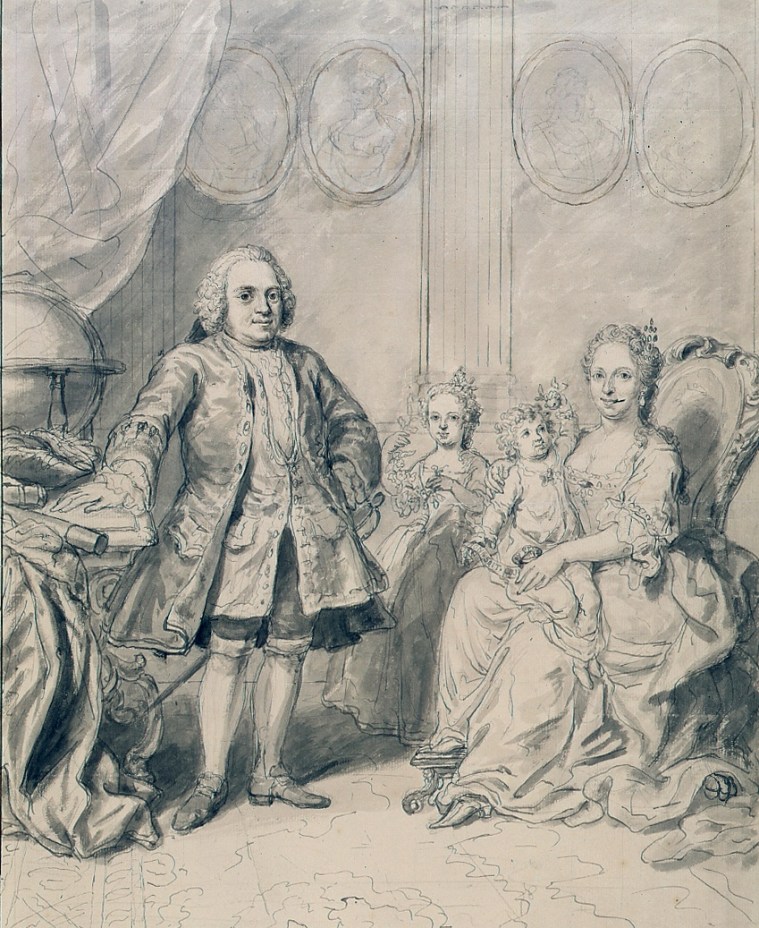
The pair travelled to Holland after the wedding festivities ended, where Anne was received coldly. The elite in the Dutch Republic favoured neutrality in the turbulent international politics of Europe at that time and did not approve of these new ties that now connected them to England. The newlyweds moved into the stadtholderly apartments at the Princessehof court in Leeuwarden, Frisia, but when William left on a military expedition, Anne promptly sailed back to England. She was eventually persuaded to return to the Republic, where she re-joined her husband and became personally involved in the day-to-day politics of the provinces he ruled: Frisia, Groningen, Drenthe and Guelders. When he became Stadtholder of all seven of the United Provinces of the Netherlands in 1747, his wife was right by his side. Although the two did not marry for love, they grew very fond of each other. Many love letters were sent back and forth between the two throughout the entire seventeen-year duration of their marriage, until William’s sudden death in 1751. He had only been Stadtholder of the United Provinces for four years, and now left this title to his three-year-old son, William Batavus (1748-1806).[6]
Image 2. Sketch of Anne of Hanover with her husband William and their children, made shortly before her husband’s death, approx., 1750, by Pieter Tanjé, Royal Collections The Hague.
For Anne, the death of her husband meant not only the loss of a man she dearly loved: it also made her a powerful political player in the Dutch Republic, which was quite unusual for a woman in this period. Unlike previous Stadtholder’s wives, Anne was not made regent of her son, but instead “Gouvernante en Vooghdesse”, Governess and Guardian, of all seven provinces. This meant she received all the prerogatives usually held by the stadtholder of the Dutch Republic, the only exception being the military positions her husband had held. Anne became an active and important player in the Dutch political landscape of the 1750s. Through both formal channels, like her seat on the Council of State, and more informal channels, like her expansive network of correspondences with other powerful figures, Anne ventured to implement her own politics.[7]
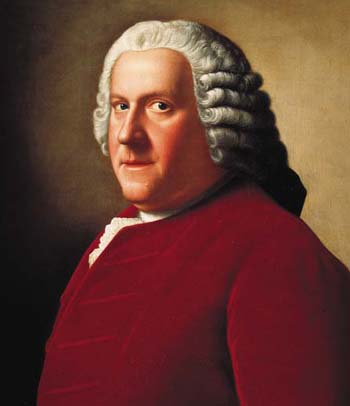
International developments made the desire for neutrality from the Dutch elite impossible to uphold, and Anne used her position to steer the Dutch Republic towards on a decidedly pro-British and anti-French course. She surrounded herself with likeminded individuals, the most notable of these being William Bentinck, lord of Rhoon (1704-1774). The two shared an important connection—William had frequented the British court at St. James’s Palace as a child. His mother was none other than Jane Temple, the same governess who had raised Anne in her formative years. For half a decade, Anne battled the pro-French factions of the Dutch political landscape, until her fragile health forced her to retreat to the Loo and Soestdijk palaces for longer and longer stretches of time.[8] Eventually, she passed away at the start of 1759. Her last utterances illustrate just how deeply she cared for the work she had done in the Republic, as she told those present at the time of her passing, ‘come now, get back to your work.’[9]
Image 3. Portrait of William Bentinck, lord of Rhoon by Jean-Étienne Liotard. Source: Wikimedia Commons.
The Archive
The archive of Anne of Hanover’s correspondence is split into five different sections, each containing a different category of letters. The first, which is marked with the letter “A” in all inventory numbers, contains all incoming letters from family members, from her siblings and her parents in England to her aunts, uncles, and cousins in several different German territories. These letters have a more personal character. The second category, marked by the letter “B”, encompasses all incoming letters from other monarchs and nobles, from the king of Sardinia to the duke of Saxony and beyond. The “C” category is by far the largest, containing all letters from private persons. These range from clockmakers and writers to mayors, vicars, and naval captains. In contrast to this, the “D” category is the smallest. These are Anne’s outgoing letters. The recipients range from her father and other family members to governors and council members. The last category, marked with “E”, contains letters from the secretariat of the stadtholderly cabinet. These date mostly from the 1750s, when Anne was fulfilling her duties as governess of the Seven United Provinces. For those interested in the political life of Anne of Hanover, this category holds a treasure trove of rarely used information. Although the Stadtholders wives project only incorporates letters into its databases, it should be noted the Royal House Archive contains other documents as well, such as contracts, minutes of political conferences, and address books.
A – Incoming letters from family members
Category A offers an insight into Anne’s relationship with the people closest to her. There are a total of 229 letters in this category, spread out over a total of nineteen correspondents, from Anne’s closest family members to many aunts, uncles, and cousins. This section uses a handful of examples to illustrate what kind of letters one can expect to find in category A.
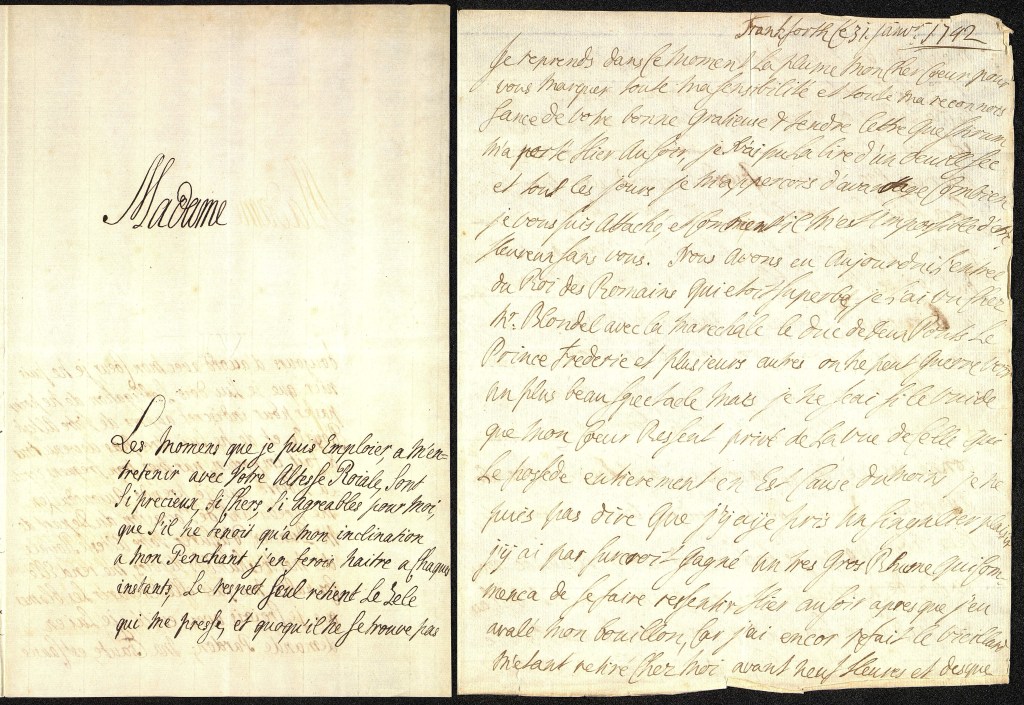
The letters from her husband William span the almost two decades of their marriage, and through them it is unmistakable how their relationship flourished over the time they spent as husband and wife. In his earlier letters, his tone is respectful and withdrawn, addressing her as ‘Madame’ and ‘your royal highness.’ Even in the formatting of his letters one can read the distance still present between the pair: he leaves open spaces at the top of each page and signs his name so large it takes up almost an entire sheet of paper.[10] Compare this to the letters he sends her later on in their marriage—every inch of paper is covered in his writing, as though he can hardly fit all of his thoughts on the page. (See image 4) There is no more mention of titles or formalities. Anne has become his ‘chère Annin’, his ‘heart’, his ‘angel’. William no longer calls himself the Prince of Orange but instead signs his letters as ‘Pépin’ or ‘Pip’, Anne’s pet name for him.
In his letters, William keeps his wife updated on his travels, his health and often mentions their children, asking her to give them a hug or a kiss in his absence. Though the subjects of his letters vary, he never fails to include a passage or a paragraph on his love for his wife. This needs no further explanation when reading the passage below, written in 1742:
Je reprends dans ce moment la plume mon cher cœur pour vous marquer toute ma sensibilité et toute ma reconnaissance de votre bonne gracieuse et tendre lettre que Stirum m’a porté hier au soir. Je n’ai pu la lire d’un oeuill sec et tous les jours je m’aperçois d’avantage combien je vous suis attaché et combien il m’est impossible d’être heureux sans vous. [I’m taking up my pen again at this moment, my dear heart, to show you all my tenderness and all my gratitude for your kind and tender letter which Stirum brought to me yesterday evening. I could not read it with a dry eye and every day I realise more how much I am attached to you and how it is impossible for me to be happy without you.] [11]
The 150 letters from William to his wife make a heart-warming read, chronicling the ups and downs up their marriage until his death in 1751. For those interested in Anne as a wife and mother, these letters are a treasure trove of information.[12]
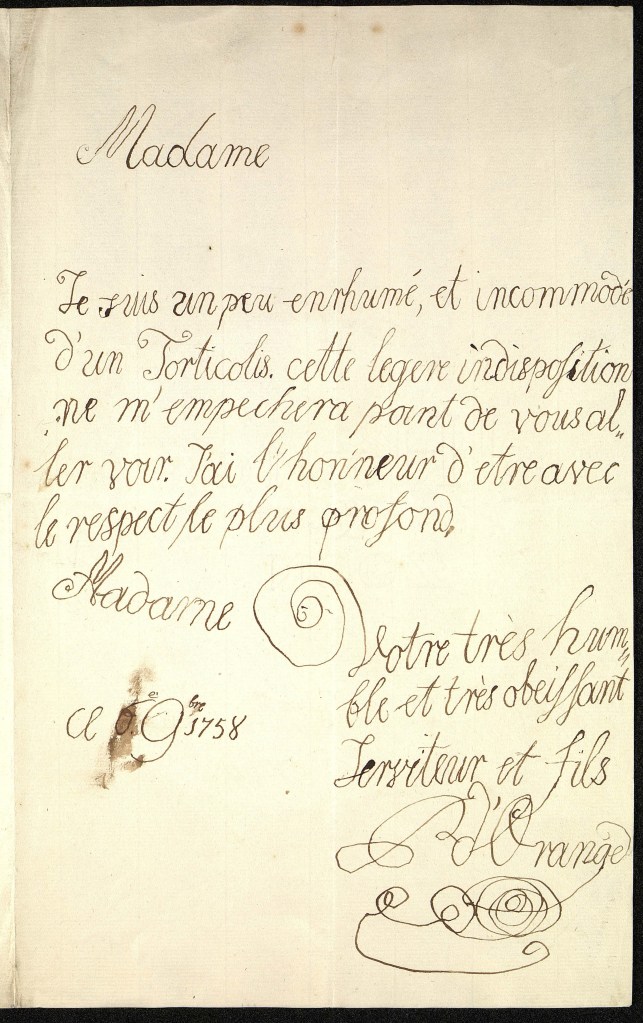
Unfortunately, few letters are available from any of the couple’s children addressed to Anne, though one note from her son, William Batavus, did find its way into the archive. At the time of writing the little prince was ten years old, addressing his mother quite formally to inform her that he’s suffering not only from a cold but also from torticollis—a stiff neck. Still, he reassures her that his ailments will not prevent him from going to see her. His young age is visible in the shakiness of the letters and the ornate curls under his name.[13] William Batavus would grow up to become William V, the last Stadtholder of the Netherlands.
Many of Anne’s family members still lived in England, and many of the letters in this category came to her from across the pond. She had a particularly close relationship to her two oldest sisters, Amelia and Caroline, whom she had grown up with in St. James’s Palace. Anne was the only one of the three sisters who married during her lifetime. Caroline (1713-1757) is believed to have been in love with courtier John Hervey, a close friend of her oldest brother Frederick. Hervey, however, was already married, and Caroline was left unmarried until her death in 1757. [14]
Amelia (1711-1786), however, fiercely opposed marriage, and made no secret of this in her letters to Anne. After receiving a letter from Anne which contained some mention of a possible marriage match for either Amelia or Caroline, she retorted as follows:
I have declar’d a thousand Times to you that marriage is the dreadfullest thing & the worst friend that I have in the world. […] Now I will tell you that as long as I have breath I shall do everything in the world to hinder Caro[line] as well as myself from doing [such] a thing.[15]
Image 6. Princess Amelia of Great Britain by Jean-Baptiste van Loo. Source: Wikimedia Commons.
Amelia also mentions Anne’s happy marriage to William: ‘I sometimes believe you think that unmarried women have no places in Heaven, for you think nobody can have the least happiness without it.’ She even goes as far as to threaten her: ‘Make no match for Caro[line] or me, Royeaux, for I shall move all the engines in life to get you divorced if you do’.[16] The nickname “Royeaux” here refers to Anne’s position as Princes Royal of England. Of course, Amelia’s threats held no real malice, and the letter was more an expression of frustration than of anger towards her older sister. Still, the difference in opinion between the two sisters is noteworthy to say the least. Amelia’s letter serves as an insight into her genuine, unadulterated opinion on marriage, juxtaposed with Anne’s happy, loving marriage.
B – Incoming letters from other nobles
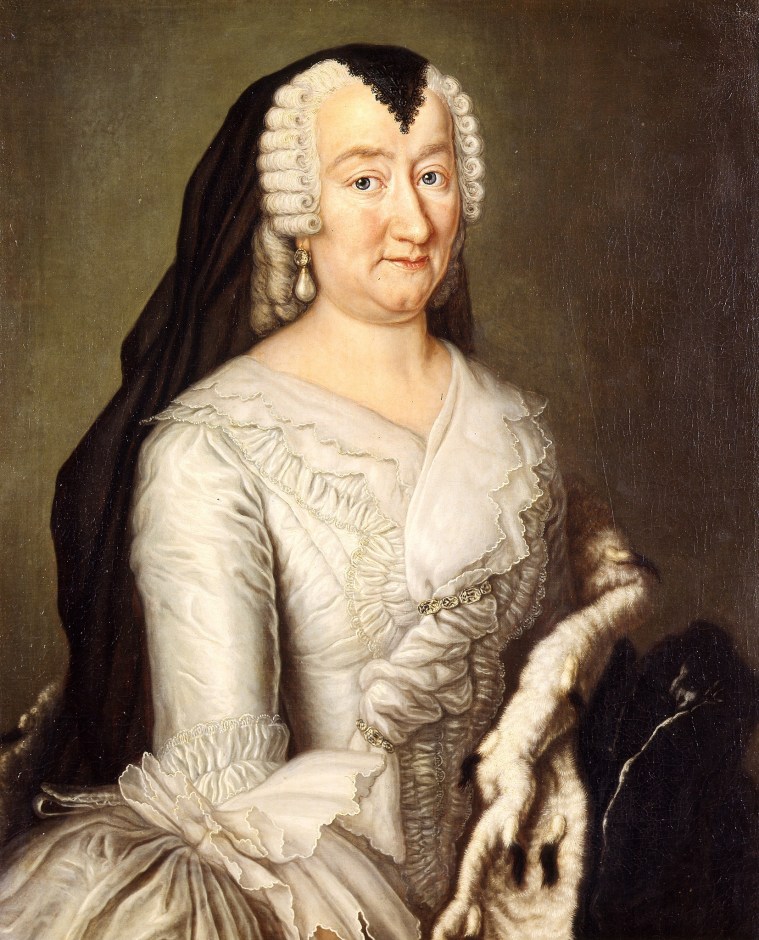
Although Category B is one of the smaller categories in the archive, containing only 68 letters from eighteen correspondents, the documents within offer a unique blend of the personal and the political. The section contains letters from kings and countesses, some of which are purely diplomatic relationships while others are distant relatives on the side of Anne’s husbands. Take for instance Countess Charlotte Frederika of Nassau-Siegen (1702-1785), a distant German cousin of William, who wrote to Anne in the autumn of 1742. The two had never met before, as Charlotte also mentions in her letter, but the countess was clearly very aware of the political power Anne wielded even in those early days. She begins her letter by flattering Anne, mentioning ‘her love of justice and her natural goodness towards everyone’. Charlotte then asks Anne for her help with a family affair, pleading for her to persuade her husband to offer his help. ‘What glory,’ she writes, ‘and what blessing can Monsieur le Prince not achieve by willingly granting them what is due to them!’[17]
Image 7. Portrait of Countess Charlotte Frederika of Nassau-Siegen by Christoph Gottfried Ringe, Royal Collections The Hague.
The fact that Charlotte sent her letter to Anne instead of to her husband, is noteworthy. Surely, she writes, the prince will not be able to disagree with Anne’s wise council! Charlotte understood, as did many others, that Anne already held quite a lot of influence over her husband and his politics and she was not to be underestimated as a political player, years before she came to rule on her own.
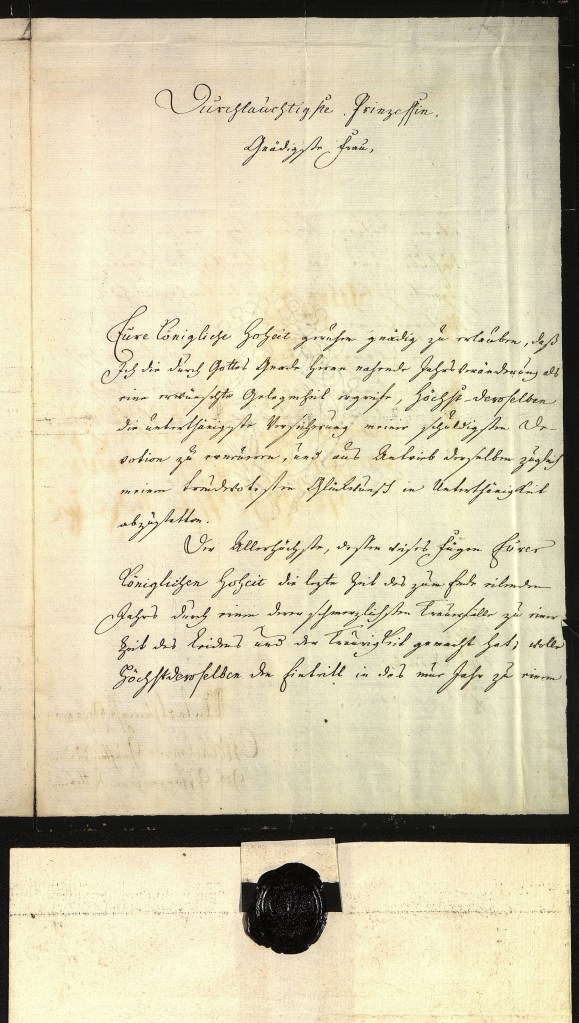
This category is also home to a set of condolence letters, which Anne received after the death of her husband in 1751. These letters are eye-catching, as they have been adorned with a thick black rim around the outline of the page, and the seals with which they have been secured are pressed into a black wax, as opposed to the customary red. (see image 8) Anne received many of these during her period of mourning, and any of them could have been selected as an example. The host of insights into how death, grief and loss were dealt with in this period is certainly an interesting topic. As both a young widow and a mother who lost multiple of her children during infancy, Anne is a fitting subject for such a study.
Image 8. Condolence letter sent to Anne of Hanover by Countess Wilhelmine Friederike of Leiningen Westerburg, with black-rimmed edges and seal. Source: KV, inv. no. A30-VIb-12.
Anne received one of these letters from Countess Wilhelmine Friederike of Leiningen Westerburg (1688-1775), another German noble. Wilhelmine, too, had lost her husband at a young age, and was thus able to empathize with Anne. Still, her letter, which she sent in December of 1751, a few months after William’s death in October, contains a silver-lining:
The Almighty, whose providence has made the last period of the year, which is drawing to a close, a time of sorrow and sadness through one of the most painful bereavements; may He make the entry into the new year a cheerful dawn of joyful days, and may He, together with His most illustrious house, point to a blessed future in uninterrupted, supreme happiness.[18]
C – Incoming Letters from Private persons
The most colourful blend of characters can be found in category C—anyone from Anne’s closest and most trusted friends to administrators and mayors from all over the Republic and beyond. Some of these names include Wybrand van Itsma (1693-1759), a member of the States-General, Augustus Schutz (1689-?), the Master of the Robes at the British court, and Frederik Vaster, a writer. In total, there are 1,110 letters from 280 different correspondents. It goes without saying this category is the biggest of the five, and it is impossible to give a complete impression of all it contains within the length of this text.
Perhaps the most touching of these letters was sent to Anne by Jane Temple (1672-1751), her old governess: the woman who had raised her since she was a child in the absence of her parents. She wrote to Anne in February of 1750, a mere year before her own death. She was already 78 years old at the time, but her fondness for Anne shines through on every page. The old governess expresses how touched she is that Anne mentioned her to her sister Amelia, whom she also helped raise. ‘I can affirm strongly,’ she writes, ‘that there is nobody whatsoever, more jealously devoted, not with more sincere affection, to [Your Royal Highness] and the Prince, then [sic] myself, and my sons, and I need not add more, from the many occasions, there has been, for the proof of this.’[19]
Image 9. Portrait of Jane Temple in her youth by Michael Dahl, National Trust Collection. Source: Wikimedia Commons.
In stating this, Jane was most certainly correct. Her oldest son was one of Anne’s most important allies and friends and would become even more important in the decade after Anne received Jane’s letter, though his mother would not live to see her son rise to such heights. As mentioned previously, William Bentinck stood by Anne’s side in her struggle to manoeuvre the Dutch Republic into an alliance with the British against the French. During Anne’s reign as Governess of the Seven United Provinces she received countless reports, summaries, and letters from him, all discussing the political landscape of the Republic and beyond. In some cases, she gave Bentinck instructions in secret, like she did in January of 1753. The letter she received from him from Brussels read as follows:
Madame, Demain matin, je pars d’ici, et je me rendrai à la Haye avec toute la diligence possible. Je crois que je suis à présent en état de donner des lumières suffisantes sur la véritable état des choses et là sur la disposition des esprits. Par le rapport que j’aurai l’honneur de faire en personne à Votre Altesse Royale, elle se trouvera, je crois, en état de se décider sur le parti qu’il faudra prendre.[20]
[Madam, Tomorrow morning I leave here, and I shall go to the Hague with all possible speed. I believe that I am now in a position to give sufficient insight into the true state of things and the disposition of minds. By the report which I will have the honour of making in person to your Royal Highness, she will, I believe, be in a position to decide on the course of action which should be taken.]
The information he gathered in Brussels is evidently quite sensitive, as he insists on reporting his findings to her in person. About forty-three of Bentinck’s letters have been preserved in the archive, stretching from 1747, when Anne’s husband was still alive, to 1756, when she was ruling on her own.[21] The letters portray the changing of the Republic’s political landscape, and how Anne’s position within it shifted over time.
The unsavoury side of the Dutch Republic in the eighteenth century is also present in Anne’s archive. Though the pieces are fewer in number, these documents discussing the trade in enslaved peoples on the coast of modern-day Ghana are certainly relevant and interesting. The letters from Nicolaas Mattheus van der Noot de Gieter (1715-1755), the director-general of the Dutch West India Company (WIC), were sent to Anne from Fort St. George, Elmina. This castle was a central hub in the slave trade in West Africa, as it acted as a depot where enslaved people from all over West Africa were gathered before they were sold to Dutch traders. Van der Noot de Gieter writes to Anne about the decline of the slave trade on the coast of Guinea (as Ghana is being referred to in the letters), which results in fewer enslaved people arriving at the Dutch forts on the West-African coast.[22]
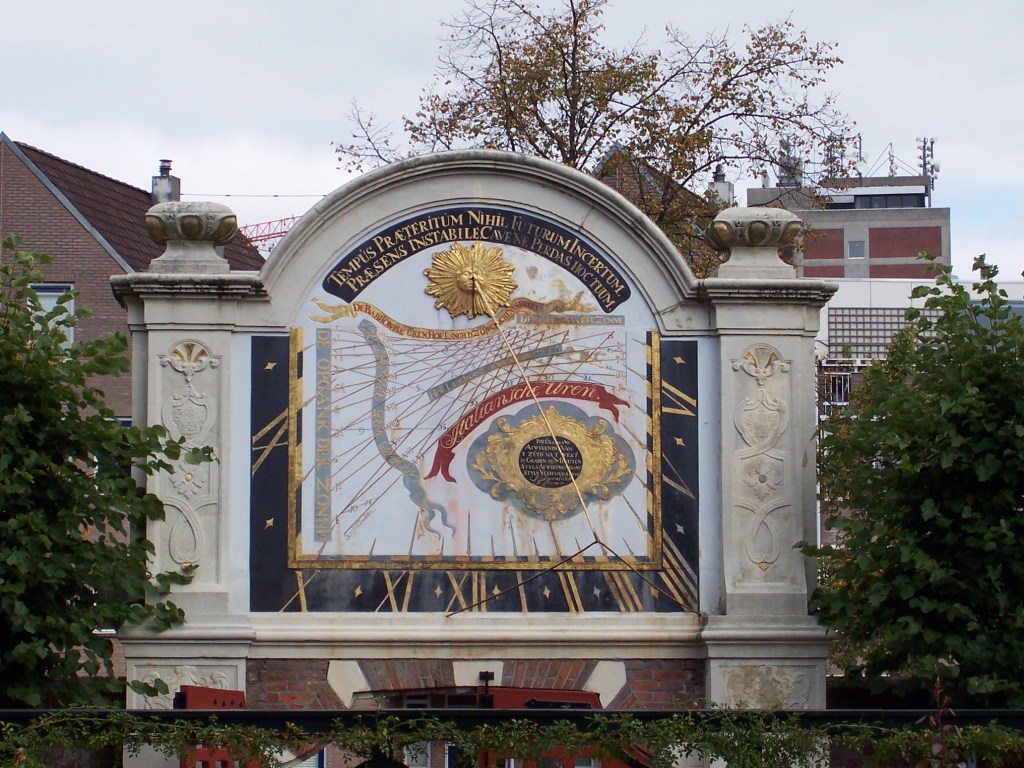
One more letter deserves a brief mention. It was sent to Anne by Gerrit Cramer (1696-1755), who achieved great fame with the timepieces and microscopes he crafted during his life. The most notable of these is the Sundial in the Prinsentuin in Groningen, which he crafted for William a few years before his marriage to Anne. Cramer continued to work for the Oranges during his career, and Anne took a great liking to him. The letter that has made its way into the archive is quite a personal one. In it, Cramer updates her on his health, as he had fallen ill and was no longer able to produce clocks for his clients, Anne among them.[23] Evidently, Anne held a deep appreciation for the arts, and cared deeply for the people producing it.
Image 10. Sundial in the Prinsentuin in Groningen, crafted by Gerrit Cramer for William IV. Photo by Bouwe Brouwer, 2006. Source: Wikimedia Commons.
D – Outgoing Letters
Letters from Anne’s own hand are a minority in the archive. There are 131 letters with about as many different recipients. Most are short drafts or minutes that briefly mention the intended recipient and the date on which the letter was written. Still, these letters give an impression of Anne in all the roles she fulfilled— the Governess of the Dutch Republic, who dealt with both domestic and international affairs, and well as the Princess Royal of England. The latter of these roles has not been mentioned often so far, but even from across the sea Anne remained a respected and beloved member of the British royal family for her entire life.
Most of the outgoing letters in Anne’s archive concern the domestic politics of the Dutch Republic, with letters from Anne to figures as the Treasurer-General Jan de la Bassecour (1696-1753), foreign envoy and governor of Willemstad Franciscus Cornabé (1706-1762), the mayors of several Dutch cities, and of course her dear friend William Bentinck, whom she kept in frequent contact with.[24] Take this letter:
N’ayant sçu qu’lier que le requête du Kerkenraad savait présentée aux Etats d’Hollande, je n’ai pas eue le temps de vous avertir et n’en ai parlé qu’au Pensionaire qui m’a promis de veiller à ce qu’elle fut traitée comme il faut, comprenant avec moi qu’elle est de la dernière importance pour le gouvernement stadhoudérien, je ne doute pas de vos attentions pour le même effet mon bon monsieur de Bentinck, étant toujours votre bonne amie Anna
[Having only heard that the Kerkenraad’s request was presented to the Dutch States, I did not have the time to inform you and only spoke of it to the Pensionairy who promised to see to it that it was treated as it should be, understanding with me that it is of the utmost importance for the Stadholderly government, I do not doubt your attentions for the same effect my good Mr. Bentinck, being always your good friend Anne][25]
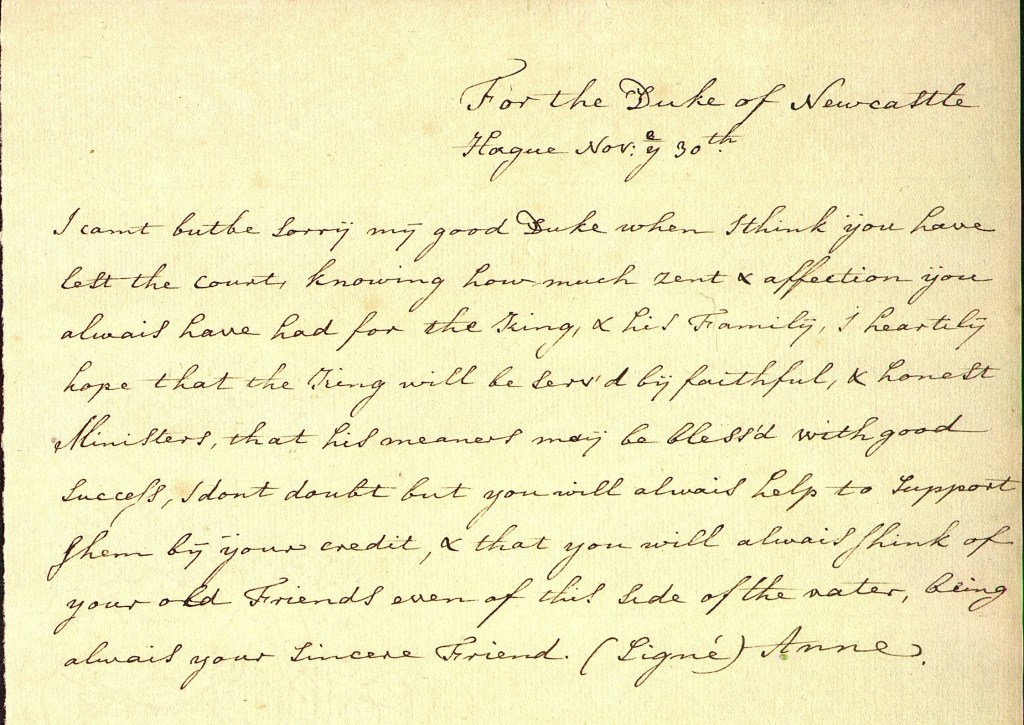
Image 11. Letter from Anne’s own hand, adressed to the Duke of Newcastle. Source: KV, inv. no. A30-VId-4.
Anne was diligent in keeping her ally up to date, even with matters that she would have the chance to discuss with him at a later moment.
Despite Anne’s focus on domestic politics taking up a large chunk of this part of the archive, her attention for the rest of the world is clearly present. In her letters expresses concern over the appointment of the captains who sail to the Indies on behalf of the Republic and even writes letters to her own father, king George II of England, which are purely political in nature.[26] This isn’t a surprise as she was trying to connect her native England with the Dutch Republic in a new allegiance. Anne wore two hats when writing letters to persons in England: the Princess Royal and the ruler of a different nation. She balanced these roles admirably, as is visible in the aforementioned letter to her father as well as in several other letters to British nobles. In a letter she wrote to the Duke of Newcastle, for instance, she does not mention her position in the Dutch Republic at all. Anne writes to him because the Duke is leaving the English royal court and her father’s service as minister, thanking him for his loyalty to the British crown. ‘I do not doubt,’ she writes, ‘that you will always think of your old Friends even of this side off the water.’[27]
Anne’s outgoing letters from her own hand thus show the diverse set of roles she had during her lifetime and how she juggled her many responsibilities.
E – Secretariat
Category E is one of the larger sections of the correspondence of the archive of Anne of Hanover, it contains many of the documents sent to her during the decade she reigned as Governess over the Dutch Republic. There are 606 letters from 436 recipients. These letters vary from appeals and request to notices of death and information from various branches of the Dutch military. For instance, there is a letter from Jacob Grauwers (fl. 1757), a naval captain, as well as letters from Hendrik Heijningen (fl. 1757) and Jacob Kley (1721-1785) asking Anne from a variety of different favours. For those studying Anne’s politics, however, the correspondence between Anne and Jan de Back (1698-1766) might be the most interesting of all. He wrote 157 of these letters—over a quarter of the entire section. De Back had been a member of William IV’s secret council and secretary of the Stadtholderly secretariat. He continued to fulfil this role after the Stadtholder had passed, making him a frequent correspondent of Anne. De Back had often worked with William Bentinck during his time under William IV, but a rift formed between the two around 1750 when it became more and more clear Bentinck sought an allegiance with England, whereas De Back favoured rapprochement with France. This made him not only an adversary of Bentinck, but it meant he diametrically opposed Anne as well.[28] De Back handled the myriad requests sent to Anne and sent her many letters summarizing them. Both these letters and Anne’s responses have been preserved in this section of the archive.[29] Due to the rising favour of the protestant Thomas Isaac de Larrey (1703-1795), whose father had fled from France to avoid prosecution, and De Back’s clandestine relations with the French envoy D’Affry he was eventually fired from his post in 1758.[30] Of course, this is only one of the threads of political discourse that can be traced through this section of the archive.
What Comes Next?
The publication of the correspondence of Anne of Hanover this coming autumn marks the end of one of the parts of the Stadtholder’s Wives project. However, there is more work to be done. Great progress has already been done on the next part, which involves the letters of Marie-Louise of Hessen-Kassel (1688-1765), wife of John William Friso of Nassau-Dietz and mother of William IV.[31] As Anne’s mother-in-law, she took over her duties after her death in 1759 and took care of the upbringing and education of William Batavus. William Batavus’s wife, Wilhelmina of Prussia (1751-1820), is also next on the list for the project.[32]
The finalization of Anne of Hanover’s database at the Stadtholder’s wives project absorbed the largest amount of time during my internship. Through adjusting, supplementing, and revising the work done by my predecessors, I became familiar with Anne, the archive, and the many letters she received and composed during her lifetime. I selected the letters I deemed the most interesting and fruitful for future research, as well as those that stood out to me for their intimate, personal nature. It has been a privilege to glimpse into the past in this way. Though there is much work that still needs to be done, I am extremely proud of the result of Anne’s database, and I am excited to see how other researchers will use these sources in their own work once they become widely accessible.
Vera Feron (Master Student Historical Studies, Radboud University Nijmegen)
Updated 29 September 2023
[1] Research is already being done with these databases. PhD candidate Lidewij Nissen uses the resources created by the Stadtholder’s wives project in her PhD project ‘The ‘First Ladies’ of the Dutch Republic: The Political Agency of the Stadtholders’ Wives in the Seventeenth Century’. See also: Lidewij Nissen, ‘“De bron van alle goeds.” Willem Lodewijk als vaderfiguur in de zeventiende-eeuwse Nassaudynastie’, in: Hanno Brand and Joop W. Koopmans (eds.), Willem Lodewijk: stadhouder en strateeg (1560-1620-2020) (Hilversum 2020) 113-130.
[2] Ineke Huysman, ‘Balancing between Mother and Wife: The Private Correspondence of Stadtholder Willem IV of Orange-Nassau’ in: Private Life and Privacy in the Early Modern Low Countries, to be published in 2023 (Brepols, Turnhout).
[3] For more in-depth information about Anne of Hanover, see: Veronica P.M. Baker-Smith, ‘The daughters of George II: marriage and dynastic politics’, in: Clarissa Campbell Orr red., Queenship in Britain 1660-1837. Royal patronage, court culture and dynastic politics (Manchester 2002) 193-206; Richard G. King, ‘Anne of Hanover and Orange (1709-59) as patron and practitioner of the arts’, in: Clarissa Campbell Orr red., Queenship in Britain 1660-1837. Royal patronage, court culture and dynastic politics (Manchester 2002) 162-192; Veronica P.M. Baker-Smith, A life of Anne of Hanover, princess royal (Leiden 1995); Simone Nieuwenbroek, ‘Een ruk naar Brits De internationale politiek van Anna van Hannover, 1756-1757’, Virtus 27 (2020) 115-132.
[4] John van der Kiste, King George II and Queen Caroline (New York 2013) 49-52.
[18] Note that the letter was originally written in French; KHA, C40 Duitse Kanselarij (DK), inv. no. C40-21-22, Letter from Wilhelmine Friederike of Leiningen Westerburg, 24 December 1751. Although this letter has been moved out of Anne of Hanover’s archive following a restructuring of said archive, it is still included in the database and is therefore also still mentioned in this text. [https://resources.huygens.knaw.nl/media/stadhoudersvrouwen/annavanhannover/A30-432-I_049.pdf]
[21] Additional letters from Anne to Bentinck are available in Bentinck’s collection. See: KHA, G002 Collection of William Bentinck, lord of Rhoon and Pendrecht, inv. nr. G002-B-10.
 Stadhoudersvrouwen